







If your child spends an hour a day in headphones for school calls, games, or music, it's worth asking a question most parents never get around to: how loud is actually too loud?
Hearing health experts commonly point to a simple guideline - the "60/60 rule" - listening at no more than 60% volume for no more than 60 minutes at a stretch. The idea isn't to police every minute of screen time; it's that repeated exposure to high volume, over months and years, is what causes gradual, often unnoticed hearing damage in children. Kids' ears are still developing, and unlike adults, children rarely self-regulate volume - they just turn it up until they can hear over background noise.
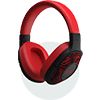
The simplest fix isn't a stopwatch. It's headphones that physically can't go past a safe level in the first place. That's the idea behind Sailor Play's built-in 85dB volume limiter - a hard cap on how loud the audio can get, regardless of how far your child pushes the volume slider. Paired with 40mm drivers tuned for smaller ears, the sound stays clear and full at that capped volume, so kids aren't tempted to look for a workaround.
Comfort matters just as much as volume for all-day wear. Sailor Play's earcups are soft and plush, designed to sit comfortably through a full school day or a long car ride, and a 60-hour battery life means one charge can outlast an entire week of use for most kids.
None of this replaces a parent's own judgement - regular check-ins about how loud is "too loud" for your specific child are still the best habit to build. But starting with hardware that already keeps volume in a safe range takes one variable off the table entirely.